


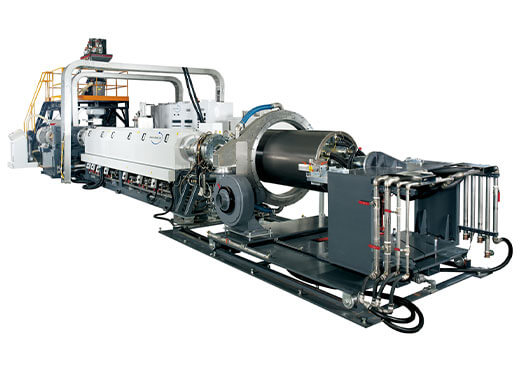
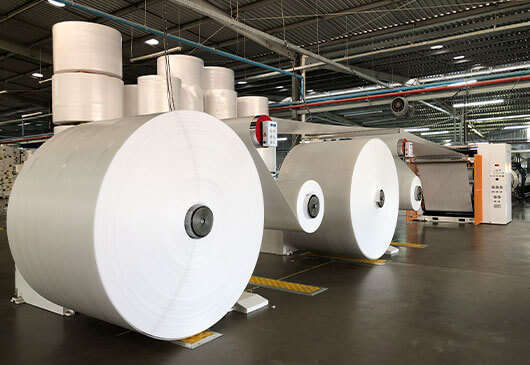
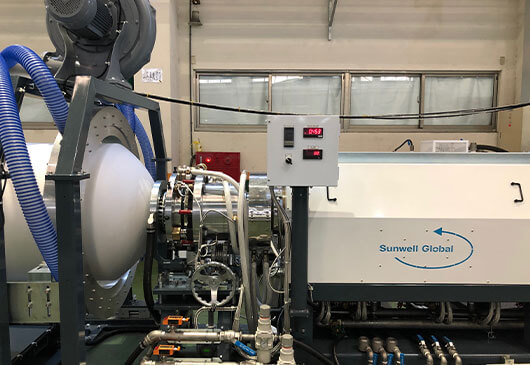
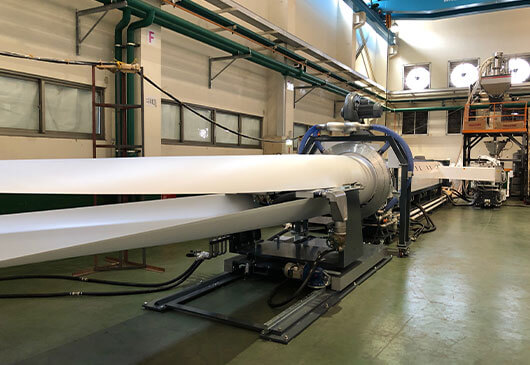
Foam Sheet Extrusion Lines
High-Performance Foam Sheet Extrusion Lines
- Material: EPS, EPE, EPP, EPET, EPLA
- Material Thickness: 0.5-12mm (details see specification)
- Output: 220-900 kg/hr (details see specification)
- Density: EPS: 35-250 / EPE: 17-30 / EPP: 35-250
Features
Engineering Excellence for Global
Packaging and Insulation Industries
Sunwell Global provides industry-leading foam sheet extrusion solutions designed to meet the rigorous demands of modern manufacturing.
Our systems are engineered to process a wide range of materials—including EPE, PS, and PP
—delivering exceptional cellular structure, surface finish, and dimensional stability.
Key Technological Advantages
1. Advanced Screw and Barrel Design
Our specialized screw geometry ensures optimal homogenization and melt stability. This precision engineering allows for higher output rates while maintaining lower energy consumption, directly improving your bottom line.
2. High-Precision Gas Injection System
Equipped with state-of-the-art blowing agent injection technology, our lines provide consistent density control. This allows manufacturers to produce ultra-lightweight foam sheets without compromising structural integrity, maximizing material yield.
3. Automated Process Control
Sunwell’s intuitive control interface provides real-time monitoring and precise adjustments. This automation minimizes human error, reduces scrap rates, and ensures consistent quality across high-volume production runs.
4. Versatility and Scalability
Whether for protective packaging, food containers, or industrial insulation, our extrusion lines are customizable to suit specific density, width, and thickness requirements.
Technical Specifications Overview
|
Feature |
Specification Details |
|
Compatible Materials |
PE (EPE), PS, PP |
|
Extrusion Capacity |
Optimized for high-volume output and consistency |
|
Cooling System |
High-efficiency air/water cooling for rapid stabilization |
|
Winding Options |
Fully automated single or double station winders |
|
Control System |
PLC-based interface with remote diagnostic capabilities |
Applications & ROI
Sunwell’s foam sheet extrusion technology is the preferred choice for sectors requiring high-performance protective and thermal solutions:
- Electronic Component Packaging: Superior cushioning for high-value goods.
- Food & Beverage: Lightweight, high-insulation PS/PP containers.
- Construction & Insulation: Durable PE foam for moisture barriers and thermal protection.
Investment Value: By integrating Sunwell’s technology, manufacturers typically see a significant reduction in energy costs and raw material waste, ensuring a fast ROI and long-term competitive advantage.
FAQ
Q: What materials can Sunwell Global foam sheet extrusion lines process?
A: Our extrusion lines are highly versatile, specifically optimized for EPE (Expandable Polyethylene), PS (Polystyrene), and PP (Polypropylene). Each system is tailored to the specific rheological properties of the polymer to ensure the highest quality foam structure.
Q: How does Sunwell Global ensure energy efficiency in foam production?
A: We utilize advanced motor technology and optimized heating elements coupled with precise PLC controls. This synergy reduces energy loss during the melting and stabilization phases, making our lines some of the most energy-efficient in the industrial machinery market.
Q: Does Sunwell Global provide technical support for international clients?
A: Yes. As a global leader in extrusion technology, Sunwell Global provides comprehensive technical support, including installation, operator training, and remote diagnostics to ensure your production line maintains peak performance.
About Sunwell Global
With decades of expertise in plastic extrusion machinery, Sunwell Global is committed to innovation, sustainability, and customer success.
We don't just sell machines; we provide comprehensive production solutions that empower manufacturers worldwide.
Applications
• Electronic Component Packaging: Superior cushioning for high-value goods.
• Food & Beverage: Lightweight, high-insulation PS/PP containers.
• Construction & Insulation: Durable PE foam for moisture barriers and thermal protection

Styrofoam Food Packaging
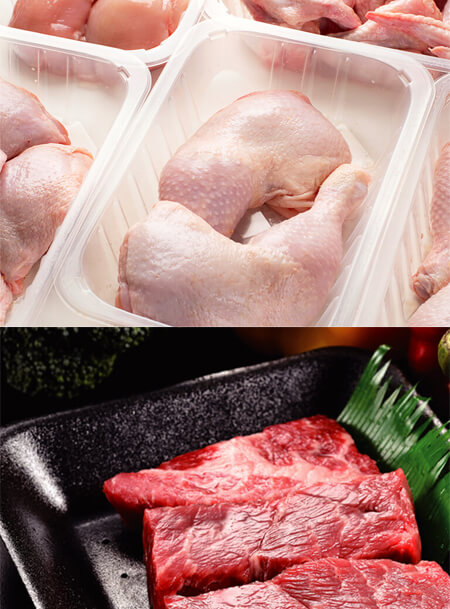
Poultry & Meat Trays
Specifications
| MODEL | FEX90120 | FEX100130 | FEX120150 | FEX150200 |
|---|---|---|---|---|
|
Material
|
EPS; EPE; EPP; EPET; EPLA
|
EPS; EPE; EPP; EPET; EPLA
|
EPS; EPE; EPP; EPET; EPLA
|
EPS; EPE; EPP; EPET; EPLA
|
|
Thickness (mm)
|
0.5 ~ 5
|
0.5 ~ 5
|
1 ~ 6
|
1 ~ 6
|
|
Width (mm)
|
700~2,000
|
1,000~2,400
|
1,500~3,000
|
1,500~3,000
|
|
Max. Throughput (kg/h)
|
EPS: 300
EPE: 220 EPP: 240 EPET: 350 EPLA: 300 |
EPS: 450
EPE: 350 EPP: 380 EPET: 500 EPLA: 450 |
EPS: 650
EPE: 480 EPP: 530 EPET: 600 EPLA: 600 |
EPS: 900
EPE: 700 EPP: 750 EPET: 750 EPLA: 750 |
|
Density (kg/M3)
|
EPS: 35 ~ 250
EPE: 17 ~ 40 EPP: 40 ~ 250 EPET: 90 ~ 450 EPLA: 90 ~ 400 |
EPS: 35 ~ 250
EPE: 17 ~ 40 EPP: 40 ~ 250 EPET: 90 ~ 450 EPLA: 90 ~ 400 |
EPS: 35 ~ 250
EPE: 17 ~ 40 EPP: 40 ~ 250 EPET: 90 ~ 450 EPLA: 90 ~ 400 |
EPS: 35 ~ 250
EPE: 17 ~ 40 EPP: 40 ~ 250 EPET: 90 ~ 450 EPLA: 90 ~ 400 |
|
Extruder Type
|
Tandem
|
Tandem
|
Tandem
|
Tandem
|
|
Screw dia. (mm)
|
90 and 120
|
100 and 130
|
120 and 150
|
150 and 200
|
|
L/D
|
34/1 and 32/1
|
34/1 and 32/1
|
34/1 and 32/1
|
34/1 and 32/1
|
|
Blowing agent
|
LEWA Triple Diaphragm Pump - Hydrocarbon
|
LEWA Triple Diaphragm Pump - Hydrocarbon
|
LEWA Triple Diaphragm Pump - Hydrocarbon
|
LEWA Triple Diaphragm Pump - Hydrocarbon
|
|
Drive System
|
SIEMENS AC Drive with FLENDER Gearbox
|
SIEMENS AC Drive with FLENDER Gearbox
|
SIEMENS AC Drive with FLENDER Gearbox
|
SIEMENS AC Drive with FLENDER Gearbox
|
|
Barrel material
|
Bimetallic
|
Bimetallic
|
Bimetallic
|
Bimetallic
|
|
Cooling system
|
Air Cool for Primary; Proportional Motorized Water Cool for Secondary
|
Air Cool for Primary; Proportional Motorized Water Cool for Secondary
|
Air Cool for Primary; Proportional Motorized Water Cool for Secondary
|
Air Cool for Primary; Proportional Motorized Water Cool for Secondary
|
|
Winder
|
Programmable Tension Control; 300mm Core 2,000mm Winding Dia
|
Programmable Tension Control; 300mm Core 2,000mm Winding Dia
|
Programmable Tension Control; 300mm Core 2,000mm Winding Dia
|
Programmable Tension Control; 300mm Core 2,000mm Winding Dia
|
|
Floor Space
|
25L x 6W x 5H M
|
33L x 6W x 5H M
|
35L x 6W x 5H M
|
37L x 6W x 5H M
|
|
Machine Weight
|
18,000 kg
|
22,000 kg
|
28,000 kg
|
34,000 kg
|