


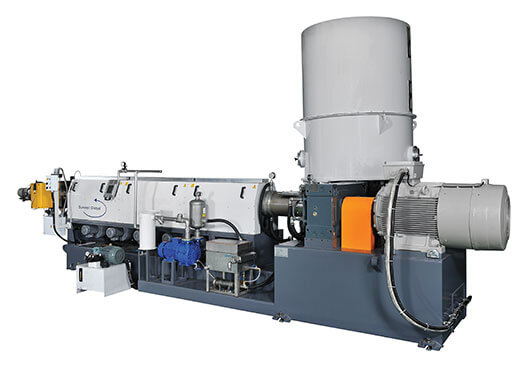

EPS, XPS, EPE Re-Pelletizing Machines
In-House Foam Waste Recycling & Reprocessing Solutions
- Material: EPS, XPS, EPE EPP
- Granular Size: 3-5 mm
- Output: 100-600 kg/hr (details see specification)
Features
An EPE foam pelletizing machine is designed to recycle expanded polyethylene foam scrap into reusable plastic pellets for downstream extrusion and molding applications. It is widely used for in-house recycling of post-industrial EPE foam waste, helping manufacturers reduce raw material costs and improve production sustainability.
Sunwell’s re-pelletizing systems are engineered for stable feeding, efficient melting, reliable degassing, and consistent pellet quality. In addition to EPE foam recycling, the system can also process EPS and XPS foam materials depending on production requirements.
What is an EPE Foam Pelletizing Machine?
An EPE foam pelletizing machine is a recycling system that converts foam scrap into uniform pellets through feeding, plasticizing, degassing, extrusion, and die-face cutting. The resulting pellets can be reused in manufacturing processes such as extrusion and molding. For foam product manufacturers, this type of machine is an effective solution for reducing waste, lowering virgin material consumption, and improving internal recycling efficiency.
Recycling Process & Machine Configuration
A complete EPE foam pelletizing machine integrates multiple systems to ensure stable operation, controlled melt flow, and consistent pellet output:
- Scrap Feeding System: Feeds lightweight EPE foam scrap into the pelletizing line through a stable and controlled force-feeding mechanism.
- Conical Single Extruder: Melts and plasticizes foam material with sufficient residence time for stable processing and efficient throughput.
- Vacuum Degassing System: Removes trapped air, moisture, and volatile gases from the melt to improve pellet quality and process stability.
- Screen Changing & Melt Filtration System: Filters contaminants and helps maintain cleaner melt flow for more consistent pellet production.
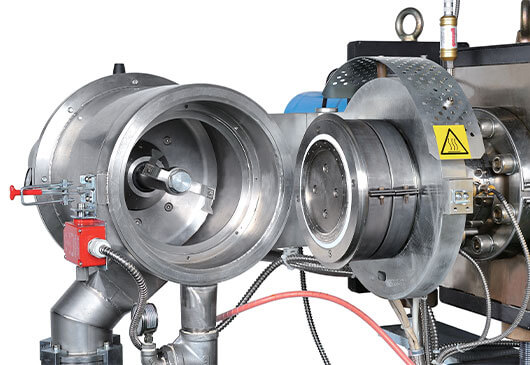
- Die Face Cutting Unit: Cuts the extruded melt into uniform pellets with synchronized speed control for stable pellet size.
- Water-Flush Cooling System: Rapidly cools freshly cut pellets to support dimensional consistency and better downstream handling.
- Pellet Drying & Collection System: Removes residual moisture and collects finished pellets for storage or reuse in production.
In actual operation, foam scrap is first conveyed into the extruder, where it is melted and filtered. After vacuum degassing, the melt is cut at the die face and cooled through a water-flush system, then dried and collected as reusable pellets. This integrated process helps manufacturers maintain stable pellet quality and efficient foam recycling performance.
Key Features of Sunwell EPE Foam Pelletizing Machine
Stable Feeding for Lightweight Foam Scrap
The system is designed to handle low-bulk-density foam scrap with controlled force feeding, helping improve material flow consistency during recycling.
Efficient Plasticizing with Low Energy Consumption
A large-diameter conical screw design provides sufficient melting capacity while supporting energy-efficient operation.
Integrated Vacuum Degassing
Vacuum degassing removes trapped gases and helps prevent bubbles, improving melt cleanliness and pellet consistency.
Precision Die Face Cutting
The pelletizing system produces uniform pellets with stable cutting synchronization and operator-friendly adjustment.
Water-Flush Cooling and Dry Pellet Output
The cooling and drying section supports low-moisture pellet production for easier downstream reuse in extrusion or molding.
Materials Supported
This pelletizing system is primarily suitable for EPE foam recycling and can also support EPS and XPS foam materials depending on processing requirements and material condition:
- EPE foam – expanded polyethylene foam scrap recycling.
- EPS foam – expanded polystyrene foam reprocessing.
- XPS foam – extruded polystyrene foam recycling.
Why Vacuum Degassing Matters in Foam Pelletizing
Foam materials often contain trapped air, gases, and volatile residues that can negatively affect pellet quality during recycling. Vacuum degassing helps remove these unwanted gases from the melt, resulting in more stable extrusion, cleaner pellets, and better downstream processing performance. For EPE foam pelletizing, effective degassing is especially important for maintaining pellet consistency and reducing defects in recycled material applications.
How to Choose the Right EPE Foam Pelletizing Machine
When selecting a pelletizing system, manufacturers should consider the following factors:
- Type of foam scrap to be recycled.
- Required pellet size.
- Target output capacity (kg/h).
- Need for degassing and melt filtration.
- Required downstream reuse application.
A properly selected pelletizing line can improve recycling efficiency, reduce material waste, and provide more stable reusable pellet quality for production reuse.
Why Choose Sunwell Foam Recycling Solutions
- Designed for stable recycling of lightweight foam scrap.
- Integrated degassing, filtration, cutting, cooling, and drying systems.
- Consistent pellet quality for downstream reuse.
- Suitable for in-house recycling and cost reduction strategies.
FAQ
What materials can this pelletizing machine process?
It is primarily used for EPE foam and can also process EPS and XPS foam materials depending on the application.
Why is vacuum degassing important in foam recycling?
Vacuum degassing removes trapped gases and volatiles from the melt, improving pellet quality and processing stability.
What are the recycled pellets used for?
The recycled pellets can be reused in extrusion and molding applications, helping manufacturers reduce waste and material costs.
Applications
Specifications
| MODEL | DRC85 | DRC100 | DRC120 |
|---|---|---|---|
|
Material
|
EPS; XPS; EPE
|
EPS; XPS; EPE
|
EPS; XPS; EPE
|
|
Material feed
|
Side Force Feed
|
Side Force Feed
|
Side Force Feed
|
|
Screw Dia. (mm)
|
85
|
100
|
120
|
|
Extruder Type
|
Conical Single
|
Conical Single
|
Conical Single
|
|
Output (kg/h)
|
100 ~200
|
200 ~ 300
|
500 ~ 600
|
|
Granular size (mm)
|
3~5
|
3~5
|
3~5
|
|
Moisture
|
3% Less
|
3% Less
|
3% Less
|
|
Degassing
|
By Vacuum
|
By Vacuum
|
By Vacuum
|
|
L/D
|
34/1
|
34/1
|
34/1
|
|
Cutting type
|
Die Face Cut, Water Flush
|
Die Face Cut, Water Flush
|
Die Face Cut, Water Flush
|
|
Die type
|
Horizontal (Melt Flow Direction)
|
Horizontal (Melt Flow Direction)
|
Horizontal (Melt Flow Direction)
|
|
Drive System
|
SIEMENS AC Drive with FLENDER Gearbox
|
SIEMENS AC Drive with FLENDER Gearbox
|
SIEMENS AC Drive with FLENDER Gearbox
|
|
Space requirement
|
10(L) x 2.5(W) x 4(H)
|
11(L) x 2.5(W) x 5(H)
|
12(L) x 2.5(W) x 6(H)
|